
csp@admin
Key Takeaways
- SAP MM is a core logistics module covering procurement, inventory, vendor management, and invoice verification, and it integrates tightly with SD, FICO, and PP.
- Demand stays strong in 2026 thanks to ongoing S/4HANA migrations, supply chain digitization, and a persistent shortage of certified SAP functional consultants.
- No programming background is required. SAP MM is a functional module suited to commerce, supply chain, and operations backgrounds as much as technical ones.
- Course fees typically range from u20b915,000 to u20b960,000 depending on delivery mode, with the official SAP exam priced separately at roughly u20b942,000-u20b945,000.
- Experienced consultants in India report average salaries between u20b916-22 lakhs per annum, with top architects in metro GCCs reaching u20b925-50 lakhs.
- Career paths span consultant, analyst, end-user, and architect roles, and many professionals eventually cross-train into adjacent platforms like Oracle Fusion.
If you have ever wondered how a company somehow always has the right raw materials on the shelf, at the right cost, from the right vendor, the answer is usually a system quietly working in the background. That system is often SAP MM.
This guide is for two kinds of readers: students trying to pick a first ERP specialization, and working professionals in procurement, warehousing, or supply chain who are wondering whether it is time to formalize that experience with an SAP credential. Either way, by the end of this blog you will know exactly what SAP MM is, what a good course covers, what it costs, and what kind of career and salary trajectory is realistic in 2026.
Prefer to talk through your options before reading further? Reach out to CloudShine’s SAP and Oracle training team here for a free consultation.
What Is SAP MM?
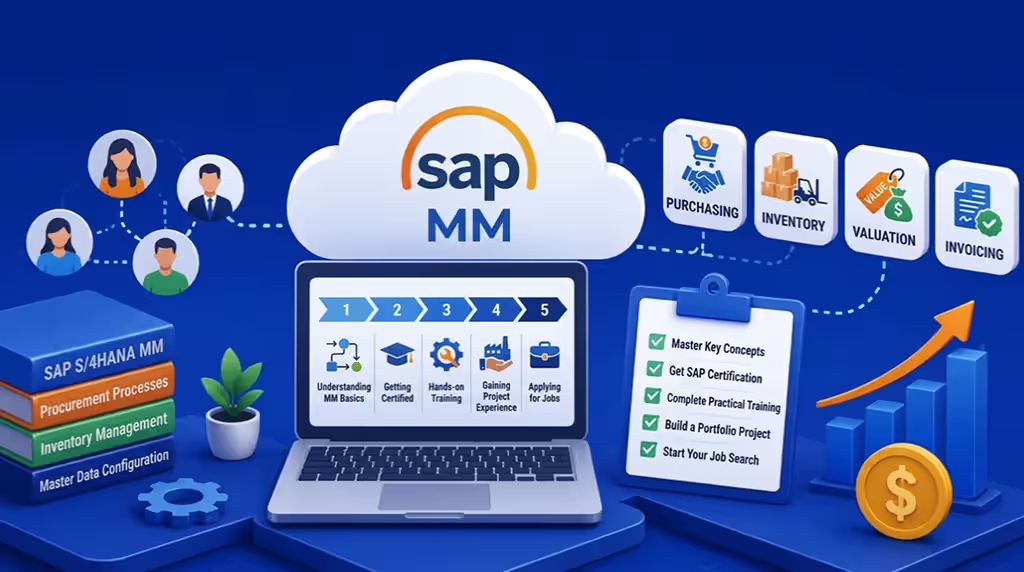
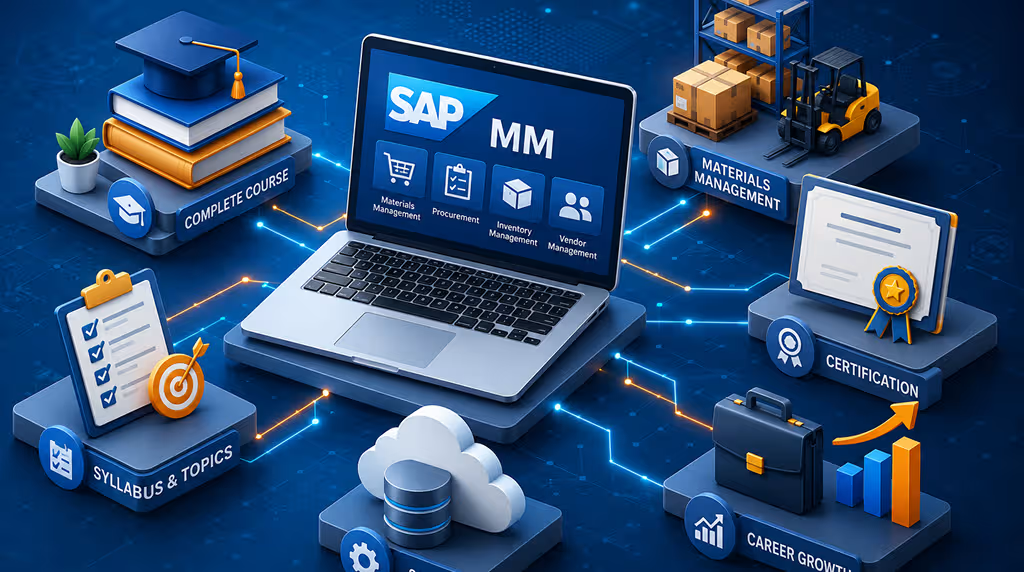
SAP MM, short for Materials Management, is one of the core logistics modules inside SAP ERP and SAP S/4HANA. In plain terms, it is the system that keeps materials, raw goods, components, spare parts, whatever a business needs to operate, moving through procurement, storage, and consumption without gaps or waste.
The module is generally built around a few connected pieces:
- Master Data: material master, vendor master, and purchasing info records that keep the system’s information consistent.
- Purchasing: requisitions, request for quotations (RFQs), vendor selection, and purchase order (PO) creation.
- Inventory Management: goods receipt, goods issue, stock transfers, and physical inventory control.
- Invoice Verification: matching vendor invoices against POs and goods receipts before payment.
- Material Requirements Planning (MRP): forecasting what needs to be ordered, and when, based on production plans.
- Valuation and Account Assignment: costing materials correctly and posting them to the right accounts.
Because SAP MM integrates tightly with modules like SD (Sales and Distribution), FICO (Finance and Controlling), and PP (Production Planning), professionals who know it well tend to become useful well beyond a single department. They understand how procurement decisions ripple into finance and production.
It is worth knowing that this is not a problem unique to SAP. Oracle Fusion applications solve a very similar challenge on the Oracle side of the enterprise applications world. If you are comparing ERP ecosystems before committing to one, our breakdown of Oracle ERP Cloud (Fusion) vs Oracle EBS is a useful companion read, since procurement and inventory are core concerns on both platforms.
Why Is SAP MM Certification a Popular Career Choice in 2026?
A few forces are converging to keep SAP MM relevant heading into 2026:
- S/4HANA migrations are still in full swing. Many enterprises that ran SAP ECC for a decade or more are now migrating to S/4HANA, and each migration needs MM specialists who can reconfigure procurement and inventory workflows for the new architecture.
- Supply chains are being digitized end to end. From AI-assisted demand forecasting to IoT-based inventory tracking, companies are layering new technology on top of SAP MM rather than replacing it, which means the fundamentals stay valuable even as the tools around them evolve.
- ERP talent shortages persist. Recruiters and training providers consistently flag a shortage of experienced, certified SAP functional consultants relative to the number of active implementation and support projects, which keeps demand and salaries elevated for certified professionals.
For someone deciding between multiple ERP specializations, SAP MM certification remains one of the more dependable entry points into supply chain and procurement-focused consulting work.
What Will You Learn in an SAP MM Course?
A well-structured SAP MM course typically walks through the module in this order.
- Procurement Management: You will learn how purchase requisitions are created and converted into RFQs, how vendor quotations are compared, and how purchase orders get generated, released, and tracked through to delivery.
- Inventory Management: This covers goods receipt posting, stock transfers between plants or storage locations, inventory valuation methods, and the physical inventory (stock count) process that keeps book and physical stock aligned.
- Vendor Management: You will work with vendor master records, supplier evaluation criteria, and the lifecycle of a vendor relationship, from onboarding through performance tracking.
- SAP S/4HANA MM Features: Modern courses now dedicate significant time to S/4HANA-specific capabilities: the simplified data model, Fiori-based apps for procurement, embedded analytics, and how MM integrates with SAP Ariba for sourcing.
Want a curriculum walkthrough tailored to your background? Book a free demo session with CloudShine here before you commit to a schedule.
Who Should Enroll in an SAP MM Course?
SAP MM courses are built to accommodate a fairly wide range of backgrounds:
- Students and freshers from commerce, supply chain, or engineering backgrounds looking for a functional consultant entry point.
- Procurement and supply chain professionals who already understand the business process and want to add SAP system skills on top.
- Existing SAP end users (in SD, PP, or FICO) who want to broaden their module knowledge.
- Career switchers moving from unrelated IT or non-IT roles into ERP consulting.
Most training providers do not require deep technical or coding knowledge. SAP MM is a functional module, not a development one, so business process understanding matters more than programming ability, which is good news if you are coming from a non-technical background.
SAP MM Course Eligibility and Prerequisites
There is no rigid eligibility bar set by SAP itself for taking MM training, but most institutes recommend:
- A bachelor’s degree, ideally in commerce, business administration, engineering, or supply chain management, though this is not a hard requirement for beginner-level programs.
- Basic familiarity with procurement or inventory concepts is helpful but not mandatory. Foundational courses typically start from the basics.
- No prior programming experience is needed, since SAP MM configuration is done through SAP’s GUI and Fiori apps rather than custom code.
Working professionals already employed in procurement, warehousing, or logistics roles often find the transition smoother, since they are learning the SAP “language” for processes they already understand conceptually. For complete beginners, most reputable training programs build in a short business process primer before diving into system configuration, so a lack of prior exposure just means budgeting a bit more time for the fundamentals early on.
SAP MM Career Opportunities After Certification
Once certified, the typical career paths include:
- SAP MM Consultant: implements, configures, and supports SAP MM for client organizations, often through a consulting firm.
- Procurement Consultant: focuses specifically on optimizing purchasing workflows, vendor negotiations, and RFQ processes within SAP.
- Supply Chain Analyst: uses SAP MM data and reporting to identify inefficiencies in inventory turnover, lead times, and vendor performance.
- SAP End User / Power User: works inside a single organization, managing day-to-day MM transactions rather than consulting across clients.
Career progression usually runs from support-level roles in the first couple of years, into functional-ownership positions (leading a module workstream on an implementation) by the third or fourth year, and eventually into senior consultant, solution architect, or SAP MM team lead roles. As your scope expands, so does your exposure to adjacent enterprise systems, which is one reason many SAP MM consultants eventually cross-train into complementary platforms like Oracle Fusion Cloud SCM or SAP Ariba rather than staying narrowly specialized.
Curious how a similar consultant career path looks on the Oracle side? CloudShine’s Oracle Fusion SCM training and Oracle Fusion Financials training programs are a natural next step for professionals who want to diversify across ERP ecosystems.
SAP MM Salary Trends in 2026
Salary data for SAP MM professionals in India in 2026 varies fairly widely depending on the source, city, and how “average” is calculated, but a consistent pattern shows up across salary trackers.
A few things worth noting: salaries tend to run meaningfully higher at Global Capability Centres (GCCs) of MNCs, companies like Shell, Walmart, or Bosch running large in-house SAP teams in cities like Bangalore, compared to traditional IT services firms. Professionals with S/4HANA and SAP Ariba integration skills are consistently reported as commanding a premium over those with only classic ECC experience.
Table: Experience Level vs. Average SAP MM Salary Range (India, 2026)
| Experience Level | Typical Annual Salary Range (₹) | Notes |
| Fresher (0-1 yr) | ₹4-7 lakhs | Varies by degree, city, and hands-on project exposure during training |
| Associate / Junior Consultant (1-4 yrs) | ₹5-9 lakhs | Moves from support tickets toward functional ownership |
| Mid-Level Consultant (4-8 yrs) | ₹9-16 lakhs | S/4HANA and Ariba integration skills push toward the higher end |
| Senior Consultant (8+ yrs) | ₹16-22 lakhs | Broader range (₹16.5-27.7 lakhs) reported across platforms |
| Architect / Principal Consultant (12+ yrs, metro GCCs) | ₹25-50 lakhs | Common in Bangalore-based GCCs of firms like Shell, Walmart, Bosch |
Figures are indicative averages compiled from multiple salary-benchmarking platforms (Glassdoor, PayScale, 6figr) and vary by city, employer type, and certification or skill mix.
Want a sense of where you would land on this scale based on your own background? Book a free career consultation with CloudShine here, no obligation.
SAP MM Interview Preparation
Top SAP MM Interview Questions for Freshers and Experienced Professionals
Interviewers typically probe across a few consistent areas:
- Configuration basics: difference between a standard PO and a contract, how release strategies work, movement types in inventory management.
- Process scenarios: “walk me through what happens from a purchase requisition to payment” is a near-universal question.
- Integration knowledge: how MM connects with FI (for invoice posting) and SD (for stock availability checks).
- S/4HANA-specific questions: differences in the MM data model between ECC and S/4HANA, and familiarity with Fiori apps for procurement.
Experienced candidates should expect deeper questions on troubleshooting real configuration issues, handling client-specific customizations, and MRP run behavior in complex plant structures.
Key Factors to Consider Before Choosing an SAP MM Training Program
Not all training providers deliver the same value for the SAP MM course fees they charge. Before enrolling, weigh these factors:
- Trainer Expertise: Has the trainer actually worked on live SAP MM implementations, or are they teaching purely from course material?
- Hands-On Practice: Look for access to a live SAP system, not just slides, so you can practice configuration yourself.
- Real-Time Projects: Case-study-based learning tends to translate far better into interview readiness than theory alone.
- Certification Support: Some institutes bundle exam guidance, mock tests, and registration assistance into the course.
- Placement Assistance: Particularly valuable for freshers and career switchers who do not already have an internal transfer path into SAP.
If you are researching options locally, providers offering SAP MM training in Hyderabad and SAP MM course in Bangalore are worth comparing directly, since both cities host a dense concentration of SAP implementation and support projects, meaning trainers there are often more current on live project practices. CloudShine offers both Oracle and SAP training tracks, and you can check current batch schedules and formats here before deciding.
SAP MM Course Fees in 2026
SAP MM course fees vary based on delivery mode, institute reputation, and depth of curriculum:
- Online training: generally ranges from roughly ₹15,000 to ₹40,000 for beginner-to-advanced levels.
- Classroom training: tends to run higher, from around ₹25,000 to ₹60,000, reflecting facility and instructor costs.
- Official SAP certification exam fee: SAP administers the formal S/4HANA MM certification exam separately from training, and it is typically priced around USD 500 (roughly ₹42,000-₹45,000), regardless of which institute you trained with.
- Study materials and mock tests: often an additional ₹5,000-₹10,000 if not bundled into your course.
Many training providers now offer combined training-plus-certification-guidance packages, which can work out more cost-effective than paying for training and exam prep separately. Get in touch with CloudShine here for current SAP course fees and batch options.
Why SAP MM Certification Is Still Worth It in 2026
Put together, the case for SAP MM certification in 2026 comes down to a few durable facts: procurement and inventory management are not going away regardless of how ERP technology evolves, S/4HANA migrations are keeping demand for MM specialists high, and certified professionals continue to report a real salary premium over non-certified peers doing similar work. The module also plays well with adjacent skills, Ariba, embedded analytics, and cross-module integration, giving certified professionals room to specialize further as their careers progress.
Conclusion
SAP MM remains one of the more accessible, dependable entry points into SAP consulting. You do not need a programming background, the career paths are varied across consultant, analyst, end user, and architect roles, and the compensation trajectory rewards experience and S/4HANA fluency. Whether you are a student evaluating your first ERP specialization or a supply chain professional looking to formalize your SAP knowledge, what is SAP MM course really comes down to this: it is the training that turns real-world procurement and inventory experience into a certified, in-demand technical skill set.
If the numbers and career paths above line up with what you are looking for, the next step is comparing a shortlist of training providers on curriculum depth, hands-on access, and placement support, rather than fee alone. Explore CloudShine’s Oracle and SAP training programs here to see current offerings, or reach out directly to discuss SAP MM batches, fees, and placement outcomes.
Frequently Asked Questions
Yes, for most candidates. Certification alone will not guarantee a role, but combined with hands-on practice and, ideally, some project exposure, it remains a strong differentiator in procurement, inventory, and supply chain hiring.