
csp@admin
Key Takeaways
- Oracle Fusion Cloud ERP grew 22% in fiscal 2025, and the global ERP market is projected to reach $106.22 billion in 2026, keeping demand for skilled professionals strong.
- The three major specialisations, HCM, SCM, and Financials, lead to different roles, salary bands, and learning curves, so your background should guide your choice.
- Financials tend to command the highest average pay, HCM offers strong stability tied to HR digital transformation, and SCM is growing fastest in manufacturing and retail.
- AI agents are now embedded across Fusion modules, so every specialisation increasingly requires comfort with automation, analytics, and AI-assisted workflows.
- Freshers, career switchers, and working professionals can all enter Oracle Fusion through a structured course that aligns with their existing skills and career goals.
Introduction
Oracle Fusion has become one of the most talked-about ERP platforms among IT professionals, finance experts, and HR leaders planning their next career move. If you are researching an Oracle Fusion course right now, you are probably wondering which specialisation actually pays off in 2026: HCM, SCM, or Financials.
The global ERP software market reached $92.6 billion in 2025 and is projected to grow to $106.22 billion in 2026, expanding at a 13% compound annual growth rate, according to Fortune Business Insights. Cloud deployments now account for more than 70% of all ERP implementations worldwide, and Oracle Fusion Cloud ERP posted 22% revenue growth in fiscal 2025, making it one of the fastest-growing enterprise platforms on the market.
With this kind of momentum behind the platform, choosing the right specialisation is no longer a minor decision. It shapes your salary trajectory, the industries you can work in, and how future-proof your skill set remains as artificial intelligence reshapes enterprise software. This guide breaks down each Oracle Fusion path so you can make a confident, informed choice.
What Is Oracle Fusion?
Oracle Fusion is Oracle’s cloud-native suite of enterprise applications that brings together finance, human resources, supply chain, and customer relationship management functions on a single platform. It is the direct successor to Oracle E-Business Suite and JD Edwards, built specifically for organisations that want real-time data, automatic quarterly updates, and a single source of truth across departments.
Rather than juggling separate systems for payroll, procurement, and general ledger, businesses run all of it through one connected Fusion environment. This unification is exactly why Oracle Fusion training has become such a sought-after skill among IT professionals, functional consultants, and business analysts alike.
Why Are Oracle Fusion Skills in High Demand in 2026?
Digital transformation is no longer optional for large enterprises, and Oracle sits right at the centre of that shift. Companies migrating away from legacy on-premises systems need consultants who understand how to configure, implement, and support Fusion applications from day one.
Oracle has also leaned heavily into artificial intelligence, releasing more than 50 domain-specific AI agents within Fusion Cloud that handle tasks such as expense classification, invoice matching, and contract extraction. This means demand isn’t just for people who know the old way of doing things. It is for professionals who can work alongside AI-powered automation and understand how it changes reporting, analytics, and daily workflows.
Salary data backs this up. In India, Oracle Fusion Consultants earn an average of around ₹8.6 lakh per year, with top performers crossing ₹20 lakh annually, according to Glassdoor’s 2026 compensation data. Financial specialists tend to sit at the higher end, often earning between ₹10 and ₹20 lakh in India and $120,000 to $160,000 in the United States.
Recruiters across BFSI, healthcare, manufacturing, and IT services are actively hiring for these roles, and job postings for Oracle Fusion professionals continue to rise every quarter. If you are still deciding on your career path, joining a structured Oracle Fusion training program now positions you ahead of the demand curve rather than behind it. Explore CloudShine’s Oracle Fusion course options to see what fits your goals.
Understanding the Three Major Oracle Fusion Career Paths
Every Oracle Fusion learner eventually faces the same question: which Oracle Fusion module should I specialise in first? The answer usually comes down to your existing background, the roles you find interesting, and where the job market is heading.
1. Oracle Fusion HCM
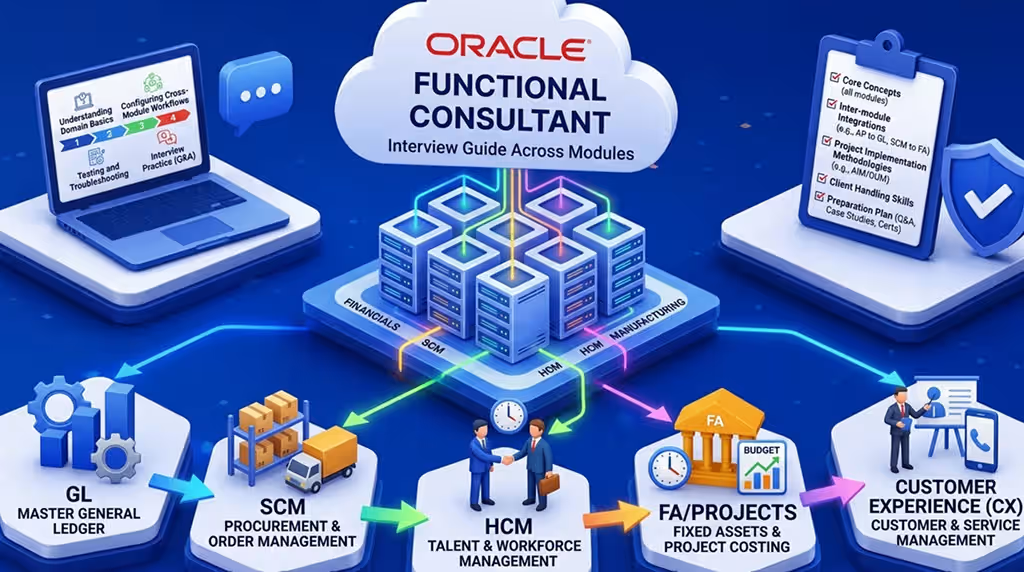
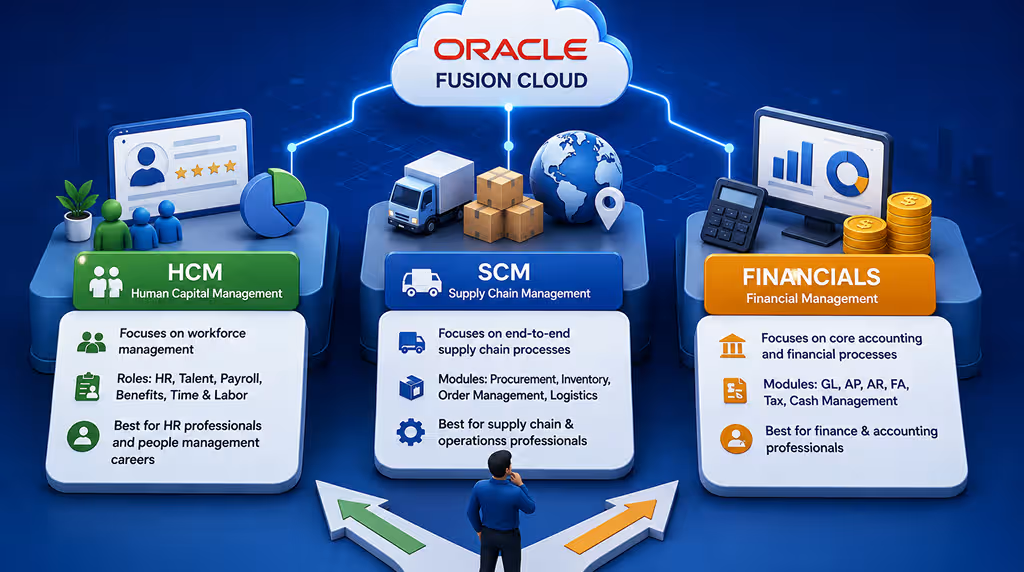
Oracle Fusion Human Capital Management covers workforce processes including Core HR, Payroll, Absence Management, Talent Management, and Goal and Performance tracking. Professionals in this space usually move into roles like HCM Functional Consultant, Payroll Specialist, or HR Systems Analyst. This path suits people who enjoy working with people processes, compliance, and organisational data rather than pure numbers or logistics. If this sounds like your strength, CloudShine’s Oracle Fusion HCM training online program takes you from fundamentals to implementation-ready skills.
2. Oracle Fusion SCM
Supply Chain Management within Oracle Fusion includes Procurement, Inventory Management, Order Management, and Manufacturing. It appeals to professionals who like solving operational puzzles, from supplier relationships to demand planning and order fulfilment. Since global supply chain disruptions pushed companies to modernise their logistics infrastructure, this module has seen a sharp rise in hiring, especially in manufacturing, retail, and CPG sectors. CloudShine’s Oracle Fusion SCM training provides hands-on exposure to procurement and inventory workflows that mirror real-world enterprise projects.
3. Oracle Fusion Financials
Financials covers General Ledger, Accounts Payable, Accounts Receivable, and Cash Management, forming the financial backbone of nearly every Oracle implementation. It is the module deployed by virtually every Fusion customer, which keeps demand consistently strong. This path is ideal for finance and accounting professionals who want to move into ERP consulting without having to start from scratch on technical skills. CloudShine’s Oracle Fusion Financials training is designed specifically for finance backgrounds looking to make that switch.
HCM vs SCM vs Financials: A Quick Comparison
| Factor | HCM | SCM | Financials |
| Core Focus | Workforce & HR processes | Procurement, inventory, logistics | Accounting & financial reporting |
| Typical Roles | HCM Consultant, Payroll Lead | SCM Consultant, Procurement Analyst | Financials Consultant, Finance Lead |
| Best Background | HR, MBA-HR, payroll | Operations, logistics, IT | Finance, accounting, CA/CPA |
| Market Demand | Strong, growing in BFSI & healthcare | Fastest growing, manufacturing & retail | Consistently highest, near-universal need |
| India Salary Range* | ₹6 to 15 LPA | ₹5 to 14 LPA | ₹10 to 20 LPA |
| Learning Curve | Moderate | Moderate to steep | Moderate for finance backgrounds |
Which Oracle Fusion Course Matches Your Background?
1. For HR Professionals
If you already work in recruitment, payroll, or HR operations, Oracle Fusion HCM is the natural next step. Your existing process knowledge translates directly into faster learning and stronger interview performance. Start with an Oracle Fusion HCM training online program that includes real project scenarios rather than theory alone.
2. For Supply Chain Professionals
Warehouse managers, procurement executives, and logistics coordinators tend to pick up SCM concepts quickly because they already understand the business processes behind the software. Oracle Fusion SCM lets you formalise that operational knowledge into a certified, high-demand technical skill.
3. For Finance & Accounting Professionals
Chartered accountants, finance managers, and accounting graduates are often the best fit for Financials. You already understand general ledger, accounts payable, and accounts receivable concepts, so the training mostly teaches you how those processes work inside a cloud ERP environment.
4. For Freshers & Non-IT Professionals
You do not need a technical background to start. Many CloudShine students come from non-IT backgrounds and build careers as functional consultants within months of completing structured training. Freshers are often advised to begin with Financials or HCM since these modules have gentler learning curves and broader entry-level demand than technical or highly specialised SCM tracks.
Key Factors to Consider Before Choosing an Oracle Fusion Course
1. Current Educational & Professional Background
Your prior work experience is the single biggest factor in how fast you will progress. Someone with finance experience will find Financials intuitive, while someone from an operations background will feel more at home in SCM.
2. Career Goals and Preferred Roles
Think beyond the certification itself. Do you want to become an implementation consultant travelling between client projects, or would you prefer a stable in-house role maintaining one company’s Fusion environment? Your answer affects which module and which learning format suits you best.
3. Market Demand and Job Opportunities
Oracle, SAP, and Microsoft together control more than 70% of the global ERP market, and Oracle Fusion alone is used by organisations ranging from mid-market companies to the largest global enterprises. Financials remains the most universally required module, but SCM and HCM openings are growing fastest as companies expand their cloud footprint beyond core finance.
4. Learning Curve and Training Requirements
HCM and Financials generally have a moderate learning curve for professionals coming from related fields, typically requiring six to eight weeks of structured, hands-on training. SCM can take slightly longer to master because it spans multiple sub-modules, such as Procurement, Inventory, and Order Management. Whichever path you choose, prioritise a program with live instance access rather than theory-only videos. See CloudShine’s Oracle Fusion Applications Training guide for a detailed breakdown of certification paths and timelines.
How AI Is Changing Oracle Fusion Careers in 2026?
Artificial intelligence is no longer a side feature in Oracle Fusion; it is being built directly into the platform’s core workflows. As of 2025, roughly 65% of ERP vendors had integrated AI and machine learning capabilities into their products, and Oracle alone shipped more than 50 role-based AI agents across Fusion Cloud, automating tasks from anomaly detection in general ledgers to supply chain disruption recommendations.
This shift, often called agentic finance and agentic operations, means functional consultants are now expected to understand how AI agents fit into approval workflows, reporting, and exception handling, not just how to configure static setup screens. Professionals who combine module expertise with comfort around AI-assisted analytics and automation are becoming the most employable candidates in the market.
Whichever module you choose, an Oracle Fusion course that includes exposure to AI-driven reporting tools and automation features will keep your skills relevant well beyond 2026.
Which Oracle Fusion Course Should You Choose?
Use this quick decision matrix to match your background with the recommended course and the career outcome you can expect.
| Your Background | Recommended Course | Likely Career Outcome |
| HR, payroll, or MBA-HR | Oracle Fusion HCM | HCM Functional Consultant, Payroll Analyst |
| Operations, logistics, procurement | Oracle Fusion SCM | SCM Consultant, Supply Chain Analyst |
| Finance, accounting, CA/CPA | Oracle Fusion Financials | Financials Consultant, Cloud Finance Lead |
| Fresher or non-IT professional | Financials or HCM (starter modules) | Associate Functional Consultant |
| Experienced ERP/EBS professional | Any module, technical or functional track | Senior Consultant, Implementation Lead |
Still unsure which path fits you best? Book a free demo session with CloudShine and speak directly with an Oracle-certified trainer before you enrol.
Call or WhatsApp +91-7587123123 or email inquiry@cloudshinepro.com to get started.
Conclusion
Choosing between HCM, SCM, and Financials ultimately comes down to your background, your career goals, and how quickly you want to enter the job market. Financials offers the broadest and highest-paying demand, HCM suits people-focused professionals, and SCM rewards those who enjoy operational problem-solving. All three are growing steadily as enterprises accelerate cloud adoption and embed AI deeper into daily operations.
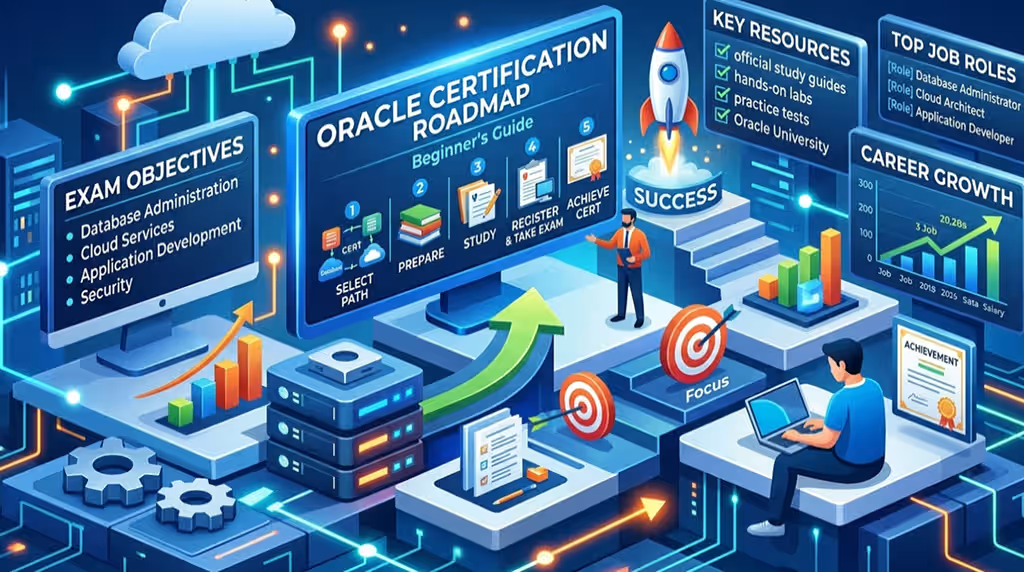
Whichever direction you choose, the most important step is enrolling in a structured Oracle Fusion course that combines real project work with certification support. Explore CloudShine’s full range of Oracle Fusion training programs and take the next step toward a cloud ERP career in 2026.
Frequently Asked Questions
Financials and HCM are generally the most beginner-friendly, since they have clearer learning paths and broad entry-level demand. Freshers can also explore CloudShine's structured programs that include mock interviews and placement support.