
csp@admin
If you have spent any time browsing ERP job listings lately, you will have noticed one phrase appearing with almost suspicious regularity: Oracle Fusion Consultant. As organisations continue migrating away from legacy, on-premise ERP systems toward Oracle’s cloud-based applications, demand for people who can implement, configure, and support these platforms has genuinely outpaced supply.
For fresh graduates and career switchers alike, this gap represents a real, well-timed opportunity, provided you know exactly how to walk through the door. Here is what makes 2026 a particularly good year to start: Oracle consulting is no longer a niche, specialist path reserved for a handful of IT veterans.
Implementation partners, consulting firms, and enterprises running Oracle Cloud all need fresh talent to keep pace with ongoing migrations, and many are genuinely willing to train motivated freshers from the ground up, provided candidates arrive with the right foundational understanding already in place.
This guide lays out precisely that: a structured and step-by-step roadmap covering the skills to build, the certifications worth earning and the practical steps that turn a beginner into a genuinely hireable Oracle Fusion Consultant, without the guesswork that leaves so many self-taught learners stuck at the almost-ready stage indefinitely.
What Is an Oracle Fusion Consultant?
An Oracle Fusion Consultant helps organisations implement, configure, customise, and support Oracle Cloud applications; translating business requirements into working, reliable systems. Rather than writing software from scratch, consultants configure Oracle’s existing cloud modules to match how a specific organisation actually operates, its approval workflows, reporting needs, and day-to-day processes.
On any given week, this might mean workshopping requirements with a client’s HR team, configuring a new approval hierarchy, testing a payroll calculation or troubleshooting why a report is not pulling the right data.
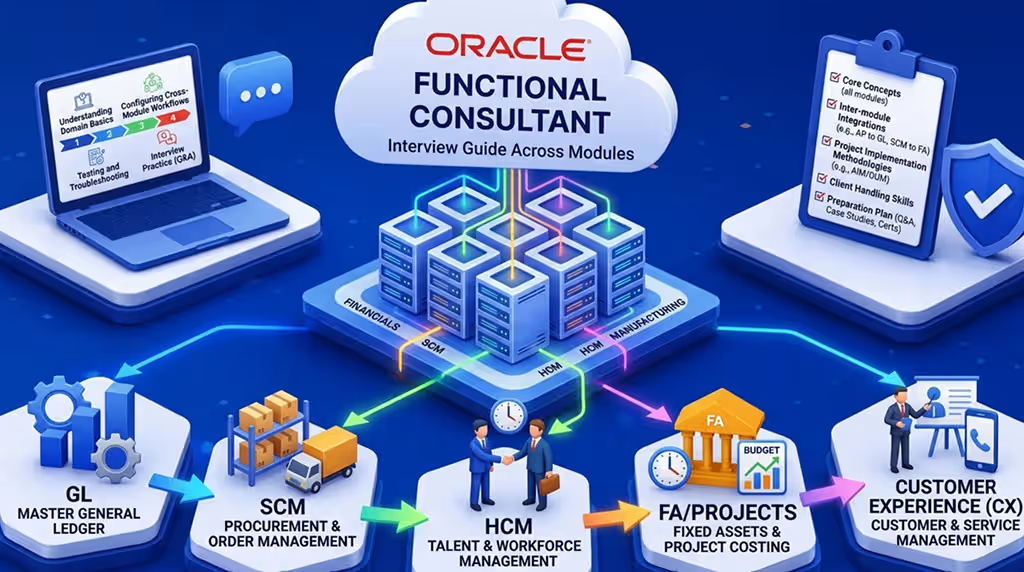
Oracle Fusion spans several major modules, including HCM (Human Capital Management), Financials, SCM (Supply Chain Management), Procurement, Manufacturing, and broader ERP functionality.
Consultants generally fall into three career tracks:
- Functional Consultants who focus on business process configuration and client-facing requirement gathering
- Technical Consultants who handle integrations, custom reports and data migration using tools like OIC and BI Publisher
- Techno-functional consultants who bridge both worlds often command the strongest long-term career flexibility since they can step into either type of project as needed.
Why Is Oracle Fusion Consulting a High-Demand Career in 2026?
The scale of global Oracle Cloud adoption is genuinely striking. According to Mordor Intelligence; India’s HCM software market alone is projected to reach USD 71.11 billion by 2031, growing at an 8.67% CAGR, with cloud deployments now accounting for 62.91% of that market. Financials, SCM, and Procurement roles show similarly healthy listings across major consulting firms and implementation partners.
This demand spans every career stage.
- Freshers benefit from a genuine skills shortage, since experienced consultants are often already committed to ongoing projects, leaving room for newly trained talent to step into support and junior functional roles.
- Experienced professionals command strong premiums for specialised module expertise, particularly in technical and integration-heavy roles.
- Career changers, HR professionals, finance graduates, and even non-IT backgrounds find a surprisingly accessible entry point, provided they invest in the right training rather than attempting to piece together knowledge from scattered, inconsistent online resources.
Ready to explore where you fit? CloudShine’s Oracle Fusion HCM Training programme is built specifically around this roadmap, with hands-on labs from day one.
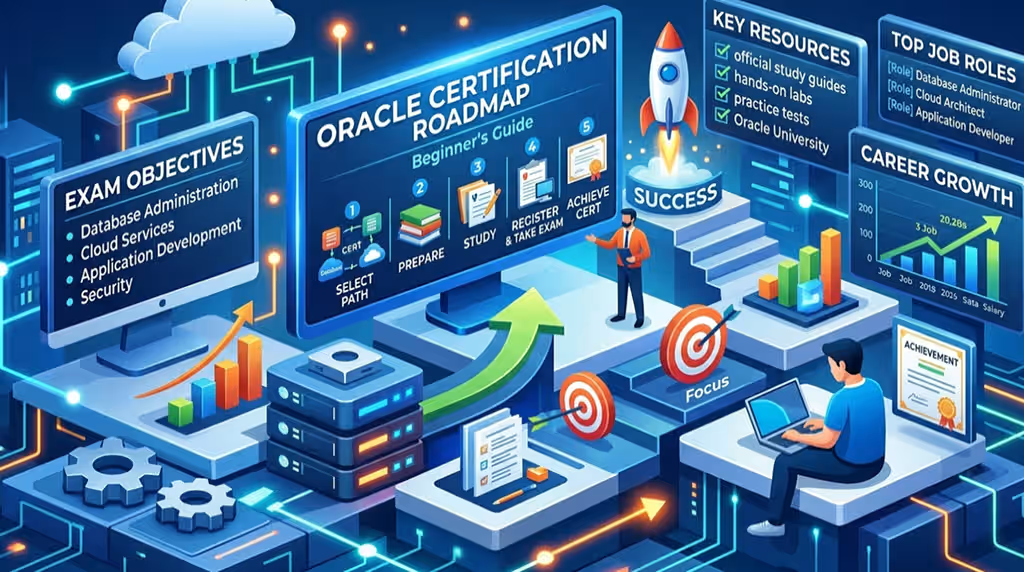
Step-by-Step Roadmap to Become an Oracle Fusion Consultant
1. Understand Oracle Fusion Cloud Fundamentals
Before specialising; build a working understanding of Oracle’s cloud architecture and broader ERP ecosystem. Get familiar with core Oracle Fusion applications and understand clearly how Oracle Fusion differs from the older, on-premise Oracle EBS (E-Business Suite), cloud-native architecture, regular update cycles and a considerably more modern interface with the other differences. This foundational fluency makes every subsequent module easier to learn.
2. Choose the Right Oracle Fusion Module
Your specialisation should genuinely reflect your background and goals; not just whichever module happens to be trending on social media or recommended by a friend who works in an unrelated field. Think honestly about what you already understand, accounting concepts, HR processes, supply chain logistics or code; since that existing foundation will make your first few months of learning considerably smoother.
- Oracle Fusion HCM: A natural fit for HR graduates and professionals moving into HR technology
- Oracle Fusion Financials: Ideal for commerce and finance graduates comfortable with accounting concepts
- Oracle Fusion SCM: Suited to engineering graduates interested in supply chain and operations
- Oracle Fusion Procurement: A strong option for those drawn to vendor and purchasing processes
- Oracle Fusion Manufacturing: Fits engineering backgrounds with production or plant exposure
- Oracle Fusion Integration Cloud (OIC): The natural home for IT professionals leaning technical
If your background is in finance, our Oracle Fusion Financials Training builds directly on accounting fundamentals you likely already understand, while our Oracle Fusion SCM Training suits those with an operations or engineering lean.
3. Learn the Required Functional and Technical Skills
Employers expect a genuine blend of capabilities; not just module knowledge in isolation.
Functional Skills
- Business process understanding
- Module configuration
- Requirement gathering
- Documentation
Technical Skills
- SQL basics
- Reporting
- Integrations
- APIs
- Oracle Cloud concepts
Soft Skills
- Communication
- Client interaction
- Problem-solving
- Analytical thinking
Notice how soft skills sit alongside technical ones. Consultants spend considerable time in client conversations. Thus; the ability to translate a vague business need into a precise configuration requirement is half the job. Employers consistently report that candidates with strong analytical thinking and clear documentation habits progress faster than those with technical knowledge alone but weak communication.
4. Enrol in an Industry-Focused Oracle Fusion Training Programme
Instructor-led training genuinely accelerates learning compared to self-study alone, provided the programme includes live projects, hands-on labs, real cloud instance access and genuine mentor support rather than pre-recorded videos with no guidance. This is precisely where quality Oracle Cloud consulting services-aligned training pays for itself, teaching you not just theory; but how consultants actually think through client problems, weighing configuration trade-offs, anticipating edge cases and documenting decisions clearly for future reference.
5. Practise Using an Oracle Fusion Cloud Environment
Theoretical knowledge alone rarely survives contact with a real client project. Practise inside sandbox environments and live cloud instances, working through configuration exercises and, ideally, full end-to-end business scenarios rather than isolated and disconnected tasks. This hands-on repetition is what actually builds confidence; not passively watching someone else configure a system on a screen recording. The more scenarios you work through independently, new hire onboarding, a promotion workflow and a payroll adjustment; the more naturally these patterns will click during real interviews and, eventually, real projects.
6. Earn Oracle Fusion Certification
Official Oracle certification validates your skills to employers who are, understandably, sceptical of self-reported expertise on a resume. Certified candidates consistently clear initial resume screening faster; particularly when applying through larger consulting firms that use certification as an early filtering criterion. Certification preparation itself; done properly; rather than crammed the night before, deepens genuine understanding of the platform in ways that pay off well beyond the exam itself.
7. Build Hands-On Project Experience
Recruiters value practical experience over theoretical knowledge, consistently and without exception. Seek out live implementation projects where possible, work through detailed case studies and mock projects and build a portfolio documenting real business scenarios you have configured, screenshots, brief write-ups and specific challenges solved; all of which help here. Project exposure is often the single biggest differentiator between candidates with similar certifications, since it proves you can actually apply what you have learned under realistic conditions and not just recall definitions.
8. Prepare an ATS-Friendly Oracle Fusion Resume
Modern recruitment increasingly relies on Applicant Tracking Systems (ATS) to filter resumes before a human ever reads them. Structure yours to highlight certifications, project experience, functional and technical skills and any internship exposure clearly. Make use of standard section headings and module-specific keywords rather than creative formatting, tables, graphics or unusual fonts that confuses parsing software and can quietly filter out an otherwise strong application before anyone sees it.
9. Prepare for Oracle Fusion Interviews
Expect a genuine mix of functional and technical questions, scenario-based problems, and discussions around the full implementation lifecycle, requirements, configuration, testing and go-live. Interviewers increasingly favour “how would you configure this business requirement” questions over simple definition recall, so practising realistic business process scenarios matters more than memorising terminology. It is also worth preparing a few genuine questions of your own about the team’s project mix and client base. Interviewers notice when candidates show real curiosity about the work itself; not just the offer letter.
10. Apply for Oracle Fusion Consultant Jobs
Cast a genuinely wide net using job portals, LinkedIn, Oracle implementation partners, established consulting firms and campus recruitment drives all represent viable paths in. Structured training programmes offering dedicated placement assistance can meaningfully shorten this search, connecting you directly with hiring partners rather than leaving you to navigate job boards entirely alone, cold-applying into an inbox that may never get opened.
Skills Employers Look for in Oracle Fusion Freshers
Beyond the roadmap itself, recruiters consistently prioritise a specific cluster of skills –
- Working Oracle Cloud knowledge
- Genuine functional expertise in your chosen module
- Basic SQL
- Strong Excel skills
- Clear documentation habits
- Communication ability
- Business process understanding
- Client-facing comfort
- Adaptability
The configurations of every client differs meaningfully from the last one. Thus, interviewers often probe adaptability specifically by asking how you would handle a requirement that does not fit neatly into standard configuration options; a genuinely common scenario in real implementation work.
It is worth noting that no single fresher arrives with all of these fully polished, and employers know this. What genuinely matters is demonstrating a credible starting point in each area, backed by training and at least some hands-on project exposure; rather than perfection across the board.
Career Opportunities After Oracle Fusion Training
Once trained; doors open across several genuinely distinct roles –
- Oracle Fusion Functional Consultant,
- Oracle HCM Consultant
- Oracle Financials Consultant
- Oracle SCM Consultant
- Oracle Procurement Consultant
- Oracle ERP Support Consultant
- Oracle Cloud Analyst
- Oracle Business Analyst
Each role carries a slightly different day-to-day rhythm, support consultants field live tickets and troubleshoot configuration issues. The implementation consultants work through structured project phases from requirements to go-live and analysts often sit closer to reporting and stakeholder communication than configuration.
Industries hiring across these roles span IT services, manufacturing, retail, banking and financial services and healthcare; virtually anywhere a large workforce or complex supply chain needs managing.
Consulting firms and Oracle implementation partners remain the largest single source of fresher hiring, though increasingly, large enterprises are also building in-house Oracle teams rather than outsourcing every project, opening a genuinely different, often more stable, career path for those who prefer working within one organisation long-term rather than rotating across client projects.
Oracle Fusion Consultant Salary for Freshers in 2026
| Experience Level | Typical Salary Range (India) |
| Fresher (post-training, no live project) | ₹4.5 – 7 LPA |
| Fresher with project exposure | ₹6 – 9 LPA |
| Mid-level (2-3 years) | ₹10 – 16 LPA |
| Senior / Specialised (technical + integrations) | ₹18 – 22 LPA+ |
According to Glassdoor’s March 2026 data; the average Oracle Fusion Consultant salary in India sits around ₹8.6 lakh annually, with top earners crossing ₹20 lakh. Salary growth depends heavily on certification, hands-on project exposure, city (Bangalore, Hyderabad and Pune consistently offer stronger packages than smaller cities), company type and module specialisation.
Technical and integration-focused consultants often out-earn purely functional peers at the same experience level; largely because integration skills remain comparatively scarcer across the talent pool.
Future Scope of Oracle Fusion Careers
Digital transformation predicts no signs of slowing and Oracle Cloud migration remains a genuinely active priority for organisations worldwide. Many mid-sized companies that delayed migration during earlier years are now accelerating their timelines considerably.
This translates into sustained global consulting demand; increasingly remote-friendly opportunities and genuine access to international projects for consultants based in India. This shift has opened doors previously reserved for consultants physically based in client regions.
Long-term, this is not a career that peaks early. Experienced consultants routinely move into solution architecture, pre-sales or practice leadership roles as their expertise deepens, and the consulting skills built along the way, client communication, requirement translation and structured problem-solving transfer well beyond Oracle specifically, into broader ERP and enterprise technology consulting more generally.
Conclusion
Becoming a successful Oracle Fusion Consultant is a genuinely achievable goal, provided you follow a structured path. Focus on building strong fundamentals, choose a module aligned with your background, gain experience with practice, earn certification and prepare thoroughly for both resumes and interviews.
Continuous learning matters too. Oracle’s cloud platform evolves constantly with new features and quarterly updates. Consultants who keep pace stay genuinely competitive throughout their careers rather than falling behind within a few short years.
The roadmap above is not meant to be rushed. Some learners move through Core modules faster, others need more time with technical concepts like SQL or integrations and that variation is entirely normal. What matters far more than speed is genuinely understanding each stage before moving to the next, since gaps in foundational knowledge tend to resurface; often at the worst possible moment, during a live client call.
If you are ready to move from research to action, explore CloudShine’s Oracle Fusion HCM Training, Oracle Fusion Financials Training, or Oracle Fusion SCM Training programmes, each built around genuine hands-on labs, live projects, and placement support. Whichever module you choose, the demand is real, and there has genuinely never been a better time to start building your future as an Oracle Cloud HCM consultant or Oracle Fusion Financial consultant.
Frequently Asked Questions
Yes, HR, finance and commerce graduates regularly build successful Oracle Fusion careers; particularly in functional consulting roles that prioritise business process understanding over coding. Many successfully transition within their first year of structured, guided training, gaining practical implementation knowledge, industry-relevant skills and the confidence to work on real-world Oracle Cloud projects.