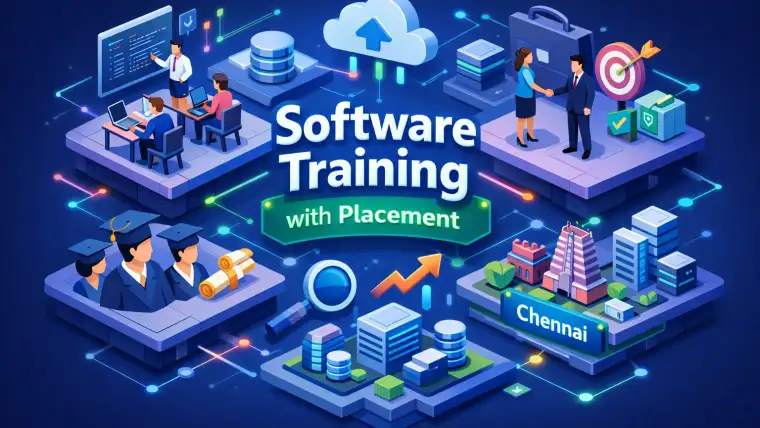
If you want a reliable software training institute in Chennai that actually helps you get hired, choose a centre that publishes cohort placement reports, runs live projects, and provides verifiable alumni outcomes — not just marketing slogans. Below you’ll find a short, practical pick list by job role, a repeatable seven‑point audit to verify placement claims, and a one‑week action plan so you can apply confidently.
Note: this guide uses Chennai examples but also highlights CloudShine as a practical alternative for enterprise/ERP careers because of its live‑instance labs, project‑based curriculum and layered placement support.
Quick shortlist: pick by job role, not the loudest promise
Developer entry roles (Java / Python / Full‑Stack): Besant Technologies, ACTE, and Livewire are common picks. Choose the one that offers a capstone project, public demo recordings, and structured mock interviews — those are the features that actually help you clear interviews.
Testing / QA and short bootcamps: Hejex Technology and FITA Academy surface often. Prioritise small batches and demonstrated automation capstone projects (Selenium/Appium pipelines and CI/CD test runs), not just scripted lectures.
Enterprise ERP / Oracle / Cloud roles: CloudShine is the recommended alternative for enterprise tracks. Demand live Oracle Fusion instances, 100% practical labs, mentorship from trainers with 15+ years of experience, and clear placement‑guarantee tiers before you enrol.
Quick verification to ask up front: cohort placement reports, sample offer letters, and a LinkedIn alumni list for the most recent batch.
The 7‑point placement audit I use (ask for evidence)
- Cohort‑wise placement report. Ask for enrolled vs placed counts by month/year and roles. This shows actual throughput, not marketing percentages.
- Anonymized offer letters or employer confirmation. Request company name, role and CTC band. Sample offer letters prove real hires.
- LinkedIn alumni export. Ask for a LinkedIn list or alumni URLs for a recent batch — at least 20% of a batch should show job changes if the claim is meaningful.
- Recruiter visit logs / campus drive schedules. Dates and employer names indicate an active hiring pipeline rather than ad hoc claims.
- Placement guarantee T&Cs. Get the eligibility rules, refund process, and the number of guaranteed interview attempts in writing.
- Demo day recordings / capstone presentations. Capstone recordings prove students built interview‑ready work, not toy projects.
- Third‑party reviews or audits. Look for independent audits or verified testimonials on platforms that allow contact with former students.
Red flags: vague “100% placement” claims without cohort data, buried fine print like “eligible students only,” or no alumni you can contact.
Copy‑paste email to request placement proof:
Subject: Request for cohort placement report and alumni links

Hi [Placement Officer Name],

I’m evaluating the [Course Name] starting on [start date]. Could you share: (1) the cohort placement report (enrolled vs placed) for the last 12 months, (2) 3–5 anonymized sample offer letters or employer confirmations, and (3) LinkedIn links for recent alumni from Chennai batches? I’ll review and decide within 48 hours.

Regards,
[Your Name] • [Phone] • [Email]
Two‑minute phone script for the placement officer:
Hi, I’m [Name]. I’m shortlisting training programmes for [role]. Before I join, can you confirm: average time‑to‑hire for graduates, whether you provide sample offer letters, and the exact eligibility for any placement guarantee? I have 2 minutes — can you hold those documents ready for email?
Compare courses, fees, syllabus highlights and realistic outcomes
| Track | Typical Duration | Fee Range (INR) |
|---|---|---|
| Python / Data Science | 3–4 months | ₹25,000–45,000 |
| Full‑Stack | 3–6 months | ₹30,000–70,000 |
| Testing / Automation | 1–3 months | ₹15,000–35,000 |
| Cloud / AWS | 1–3 months | ₹20,000–50,000 |
Syllabus must‑haves: core language fundamentals, one capstone project with end‑to‑end code, version control (Git), basic deployment, and structured interview prep (live mocks and coding challenges). If a course lacks a capstone or deployment module, expect gaps when interviewers ask about production readiness.
Interview‑ready outcomes: entry‑level titles you should target include Junior Developer, QA Engineer, and Data Analyst. Realistic time‑to‑hire after course completion is usually 2–6 months depending on market demand and how much interview practice you put in.
How to map budget to outcome: low‑cost short courses suit immediate, low‑expectation hires; mid‑cost full‑stack or ERP programmes with placement support target longer salary increases and better roles. Prioritise verified placement outcomes over marginal fee differences.
12‑institute snapshot: claims, evidence gaps and exact questions to ask
| Institute | Claim | Verified / Not Verified | Two verification questions |
|---|---|---|---|
| Aimore Technologies | “100% placement support” | Not verified (no cohort data) | 1) Cohort placement report for 2023–25? 2) Top 10 recruiters (with dates)? |
| Greens Technologys | Placement track record, 3–8 LPA claims | Not verified (no offer letters) | 1) Sample offer letters for 2024; 2) LinkedIn alumni export for Chennai campus? |
| Naresh i Technologies | Live project training | Partially verifiable (old records exist) | 1) Recent capstone recordings; 2) Average time‑to‑hire for last 2 batches? |
| FITA Academy | Campus recruiters visit regularly | Not verified (no recruiter logs) | 1) Recruiter visit log for Chennai 2024–25; 2) Sample offer letters? |
| Credo Systemz | Placement assistance | Not verified | 1) Cohort placement figures; 2) CTC ranges for placed students? |
| Besant Technologies | Job guarantee courses | Partial (some student lists shown; limited verification) | 1) T&Cs for guarantee; 2) Alumni contacts for the 2023 cohort? |
| Livewire | Full‑stack & data science focus | Not verified | 1) Recent demo day videos; 2) Capstone project repos? |
| ACTE | 100% placement support | Not verified | 1) Cohort placement lists; 2) Refund process if guarantee not met? |
| Hejex Technology | Small batches & live projects | Partial (claims unverified) | 1) Live project access evidence; 2) Batch size & trainer CVs? |
| SLA Institute | Tie‑ups with 1,000+ MNCs | Not verified | 1) Sample recruiter list for Chennai; 2) Recent placement report? |
| Payilagam | Placements at TCS / Infosys | Not verified | 1) LinkedIn alumni confirmations; 2) Sample offer letters? |
| Aptech (local) | National network placements | Not verified (no Chennai‑specific stats) | 1) Chennai campus placement report; 2) Recruiter visit log? |
Application checklist + contact scripts to convert placement opportunities
- Shortlist 2–3 institutes by course fit and budget.
- Send the audit email requesting placement report, offer letters and alumni links.
- Attend demo classes and verify capstone depth (ask to see a recent capstone in full).
- Request written placement T&Cs and a recruiter list; schedule a 10‑minute call with the placement officer.
- Negotiate fees — mention you’ll decide within 48 hours if proof is provided; ask for concessions if you bring referrals.
- Enrol, get the batch schedule, and start interview prep the day classes begin.
Final verdict & next steps — pick and apply in 7 days (where CloudShine fits)
- Day 1: Shortlist 2–3 programmes by role and budget.
- Day 2: Send audit email to each and request demo class links.
- Day 3: Attend demos and review capstone recordings.
- Day 4: Call placement officers, verify T&Cs, and request sample offer letters.
- Day 5: Compare offers, fees, schedules and decide on concessions.
- Day 6: Negotiate and finalise enrolment paperwork.
- Day 7: Enrol and share your resume + project links with the placement cell.
If your target is enterprise ERP or Oracle Fusion roles, CloudShine is a practical pick because it provides live Oracle Fusion instances, 100% practical labs, trainers with 15+ years of implementation experience, and a placement cell that offers resume workshops, mock interviews and tiered placement‑guarantee options. If you want a short placement‑clarity call, CloudShine’s placement team offers a 15‑minute review where they’ll: confirm course fit, show sample capstones, and explain placement guarantee eligibility.
Further reading — Cloud & Oracle resources: For more background and implementation‑level reading, see What is Oracle Fusion Cloud and Why Does It Matter, an intro to SCM modules in Oracle Cloud Applications, the Oracle Fusion Supplier Portal important roles guide, a practical note on Order to Cash back‑to‑back buy flow, and a troubleshooting piece on common errors in Oracle Fusion cost accounting.
Summary & call to action
Shortlist two institutes, demand cohort evidence, and prioritise capstone work and verifiable alumni outcomes. If you need help verifying claims or want a neutral placement review, book a 15‑minute placement‑clarity call with CloudShine’s team — they’ll show live‑instance proof and placement T&Cs so you can decide with confidence.
FAQs
Q: How do I know a placement guarantee is real?
A: Ask for written T&Cs that include eligibility, the number of guaranteed interview attempts, and a refund clause. Verify with sample cohort outcomes and offer letters.
Q: What documents should I prepare before contacting institutes?
A: One‑page resume, GitHub/portfolio links, two sample projects, and an availability calendar for interviews.
Q: How long before I can expect a job after a bootcamp?
A: Typically 2–6 months. Outcomes depend on role, market demand, and interview practice intensity.
Q: Are online‑only institutes less likely to place me?
A: Not necessarily. Prioritise evidence of live projects, alumni in real jobs, and an active recruiter pipeline over delivery mode.