If you want rapid entry into Oracle application development, pick an APEX-first oracle developer course (APEX Foundations → APEX Developer Professional → ship a portfolio app). If your goal is cloud-native development or microservices on Oracle Cloud, target the OCI Developer Professional path and pair it with PL/SQL plus a container/Functions capstone. For career pivots, combine structured labs, a deployable capstone, and targeted interview prep to move into production roles within 4–6 months.
This guide is written for three reader types: the Aspirant (new graduate or entry-level), the Pivoter (ERP/DB professionals moving to cloud), and the Enterprise learner (teams or managers upskilling staff). Read on to compare providers, estimate time and cost, and follow a concrete study path you can start today. If you prefer a guided, bootcamp-style experience with live Oracle instances and placement support, CloudShine’s instructor-led option (60:24 practical hours, mentor access, mock interviews and resume help) is discussed where relevant.
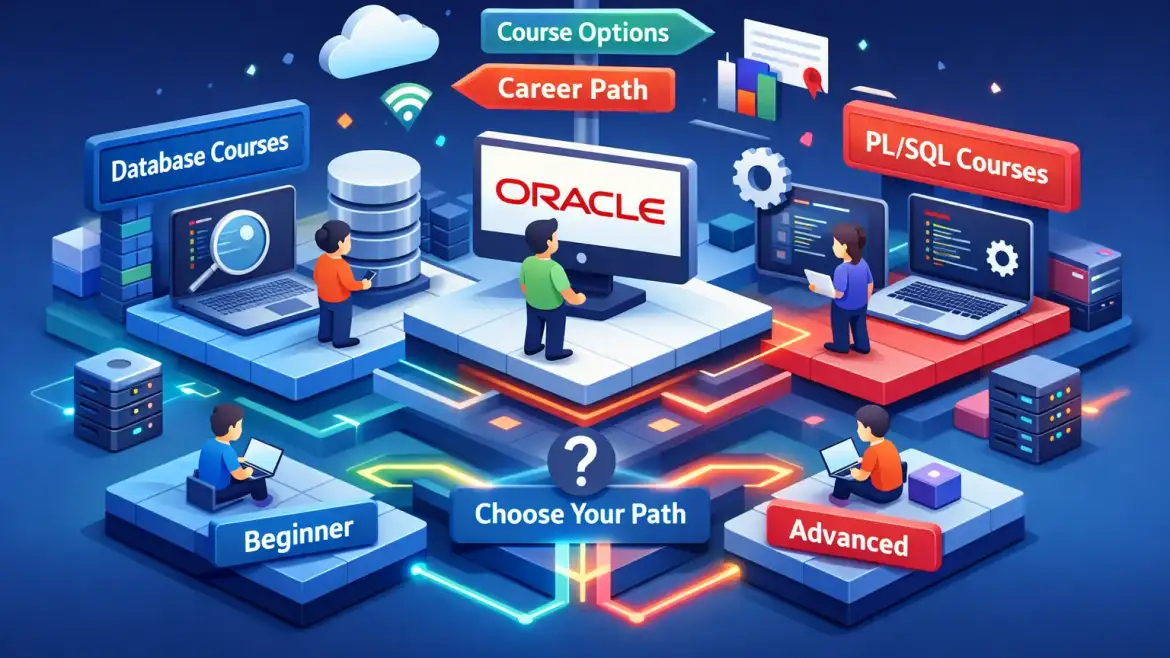
Which developer track fits your goal?
Aspirant / New grad — Best short path: APEX Foundations + a solid SQL/PL‑SQL primer, then build one APEX app. You can reach a minimum hireable portfolio in ~90 days if you practice daily and publish a working app.
Pivoter / ERP consultant — Best for established professionals: APEX Developer Professional plus a PL/SQL deep dive and basic OCI. Four to six months of structured study and migration projects will show employers you can modernize legacy systems.
Cloud‑native developer — Best for microservices and DevOps: OCI Developer Professional (1Z0‑1084‑25) with a container/Functions project and CI/CD. Expect six months or more depending on prior container experience.
Why these tracks matter: APEX dramatically shortens time-to-product because it’s low-code and database-native; PL/SQL remains the database backbone for complex business logic; OCI knowledge makes your work deployable and observable in production.
Quick evaluation checklist (use this when scanning any course):
- Hands-on labs with real Oracle or OCI instances (not just screenshots).
- A capstone or deployable project that you can link on your resume.
- Mentor or instructor access for Q&A and code review.
- Placement support or interview prep (mock interviews, resume help).
- Clear mapping between syllabus and certification objectives.
How top providers stack up
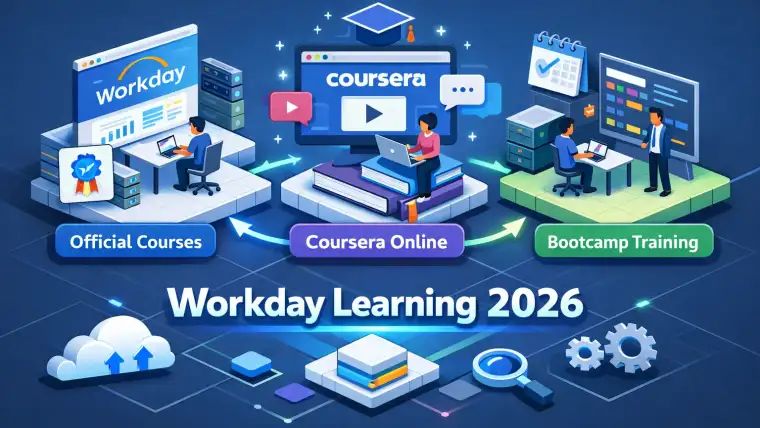
Oracle University
What it is: Official learning paths, exam-aligned content, and sanctioned labs. Strengths are accuracy, up-to-date curricula, and direct exam mapping. Weakness: instructor-led pricing can be high and lab access may require subscriptions. Best use: final-stage certification preparation and hands-on exam labs.
Coursera
What it is: Structured specializations with deadlines, quizzes, and project submissions. Strengths include guided pacing and recognized course certificates; weaknesses are limited live mentorship and variable depth on platform-specific admin tasks. Best use: beginners who like guided learning and project-based assessments.
Udemy
What it is: On-demand video courses often focused on SQL, PL/SQL, and exam prep. Strengths are low sale prices and compact topic coverage; weakness is inconsistent quality—pick high-rated instructors and updated syllabi. Best use: targeted skill topping or exam-cram modules.
Bootcamps / Private training
What it is: Intensive mentor-led programs that combine labs, projects, and placement assistance. Strengths are speed-to-job and personalized feedback; cost is higher. Best use: career pivoters who want a fast, supported track into employment. For guidance on selecting a provider for enterprise or team engagements, see How to Choose the Right Oracle Implementation Partner: Key Considerations, CloudShine.
CloudShine (practical option)
What it is: A hands-on, placement-focused training provider with live Oracle/Cloud instances, practitioner mentors and a placement cell. Strengths include the 60:24 practical hours model (60 hours instructor-led + 24+ lab hours), resume and mock-interview support, and corporate-ready project scenarios. Best use: candidates who want instructor guidance plus tangible placement assistance rather than fully self-paced study. For an example training track you can review, see Master Oracle Fusion SCM Training Quickly: Your Path to Success.
Pricing snapshot (approximate): Oracle lab subscriptions $29/month or $299/year; Oracle certification costs typically $245 per attempt; Udemy sale prices typically $10–$20; Coursera subscription around $49/month. Verify current rates before enrolling.
Evaluate course quality beyond ratings by checking the syllabus for explicit exam-objective mapping, the presence of sample labs or capstones, and instructor background (industry experience >10 years is a useful signal).
Certification map: APEX, OCI Developer, Database / PL‑SQL
APEX pathway
Core steps: APEX Foundations (~3 hours) then APEX Developer Professional (~22 hours). Typical certification: APEX Cloud Developer Professional (exam 1Z0‑771). Topics: low-code app builder, SQL Workshop, REST integration via ORDS, security, PWAs, and deployment on OCI.
OCI Developer Professional (1Z0‑1084‑25)
Exam format and focus: 90 minutes, multiple‑choice and scenario questions, emphasis on containers, Oracle Functions, API Gateway, Events/Streaming, observability and deployment patterns. Passing score commonly reported near 68%—verify on Oracle’s exam page before scheduling: OCI Developer Professional exam details. Hands-on lab practice with Functions, OKE, and API Gateway is essential.
Database / PL/SQL certifications
Coverage: SQL fundamentals and Oracle SQL specializations, PL/SQL programming, stored procedures, performance and optimization. These certifications remain core evidence of database competency for most Oracle roles and pair well with either APEX or OCI tracks.
Costs and logistics: Plan for ~$245 per exam attempt, plus optional lab subscriptions ($29/month or $299/year) or the OCI trial credit ($300) to run hands-on scenarios. On test day expect scenario-style questions—practice time management and focus the last two weeks on labs and timed practice exams.
Practical study plans and the hands-on lab checklist
90‑day Beginner plan (Aspirant): Aim for 10–12 hours/week. Weeks 1–2: SQL basics and simple queries. Weeks 3–6: PL/SQL fundamentals and stored procedures. Weeks 7–10: APEX Foundations and a small CRUD app. Weeks 11–12: polish, deploy the app, take practice exams. Deliverable: a deployed APEX app and three clear resume bullets describing its business value.
180‑day Pivoter plan: Deepen PL/SQL, complete APEX Developer Professional labs, add ORDS and REST endpoints, learn basic OCI services like Object Storage and Compute, and execute a migration capstone (legacy form → APEX). Deliverable: end-to-end app with data integration and deployment notes.
270–365 day Cloud‑native path: Prepare for the OCI Developer Professional exam while containerizing parts of your app onto OKE, build serverless Functions and an API Gateway, and automate releases with a CI/CD pipeline. Deliverable: a microservices demo with observability and a README that explains architecture and deployment steps.
Hands-on lab checklist (must-do items):
- Create an OCI trial tenancy and enable the always-free resources for initial practice.
- Provision an APEX workspace and build a CRUD application using shared schema objects.
- Enable ORDS and expose one REST endpoint for your app.
- Publish static assets or exports to OCI Object Storage and test public access.
- Containerize one component, push to OCIR, and deploy to OKE or run as a Function.
- Integrate basic monitoring/logging (OCI Monitoring and Logging) and collect metrics during a simple load test.
Weekly time allocation example: 10–12 hours/week — allocate roughly 6 hours to labs and 4–6 hours to instruction, reading and practice exams.
Employer lens: what hiring managers actually want
Top skills listed first on job posts are APEX development, advanced SQL/PLSQL, REST APIs via ORDS, query performance tuning, and practical OCI familiarity. Java appears less often unless the role is explicitly cloud-native or microservices-focused.
Titles and expectations: An “APEX Developer” should show deployed APEX apps and dashboards; a “PL/SQL Developer” must demonstrate stored procedures, packages and performance tuning examples; an “OCI Developer” needs a containerized app or Functions endpoint plus CI/CD evidence.
High‑impact projects to showcase (describe in your repo and resume): an expense-management app with approval workflows; an approvals/workflow system with email notifications and audit trail; a reporting dashboard with parameterized queries; a REST-enabled backend using ORDS; a small containerized async worker using OCI Functions or a job queue.
Interview prep: prepare to walk through your app architecture, justify design trade-offs, read basic execution plans for performance questions, show logs and monitoring during a demo, and rehearse common PL/SQL scenarios (bulk processing, exceptions, performance pitfalls).
Final recommendation, immediate next steps, and FAQs
Match your persona to the quickest path: Aspirant → APEX-first (90 days, low cost); Pivoter → APEX + PL/SQL + basic OCI (4–6 months); Cloud‑native → OCI Developer Professional + containers and CI/CD (6+ months). Cost ballpark: $0–$300 for self-study + exam fees (~$245) versus $500–$2,500+ for instructor-led or bootcamp options depending on provider and placement services.
Three-step actionable plan:
- Choose the right Oracle implementation partner and select your track (APEX / OCI / PL/SQL) and enroll in one course mapped to that goal.
- Reserve hands-on time: activate an OCI trial, buy a one-month lab subscription if you need extended instances, and follow the 90/180/270 plan that fits your timeline.
- Build and publish one capstone app, take a practice exam, then schedule the official certification attempt.
CloudShine’s practical bootcamp-style option is designed for candidates who prefer live, mentor-led instruction with direct instance access and placement support—request a free counseling call via CloudShine’s contact page to discuss batch schedules and placement options.
FAQs
How much does certification cost and how long to prepare? Exam fees are typically around $245 per attempt. Prepare time ranges from 2–3 months for APEX beginners to 6+ months for OCI cloud-native roles depending on prior experience.
Which is quicker to job-readiness: APEX or OCI? APEX is faster to ship production apps and often faster to job-readiness; OCI skills are higher-value for cloud-native roles but usually take longer to master.
Can I pass with only Udemy/Coursera and self-study? Yes—many candidates certify through self-study, but success requires disciplined hands-on labs and at least one deployable project to show employers.
What projects should I build to get hired? Build a business-facing APEX app with workflows, a REST-enabled backend using ORDS, and one containerized component or Function to demonstrate cloud readiness.
How do I get affordable OCI/APEX labs? Use the OCI free trial ($300 credit + always-free tier) for initial practice, then consider Oracle’s lab subscriptions ($29/month) if you need sustained hands-on access.
Actionable takeaway to copy-paste into your planner: enroll in an APEX or OCI course this week; activate an OCI trial; set 10–12 hours/week for hands-on labs; complete one capstone app by week 12; book a practice test and one mock interview before scheduling your official exam.
Final note: pick a single track, focus on shipping one real app, and make your learning visible. Employers hire demonstrable results; certifications help, but a working, documented project will get you the interview. If you want guided, practical instruction and placement support, CloudShine’s practical bootcamp-style option is designed for exactly that outcome—get a free counseling call and start building.