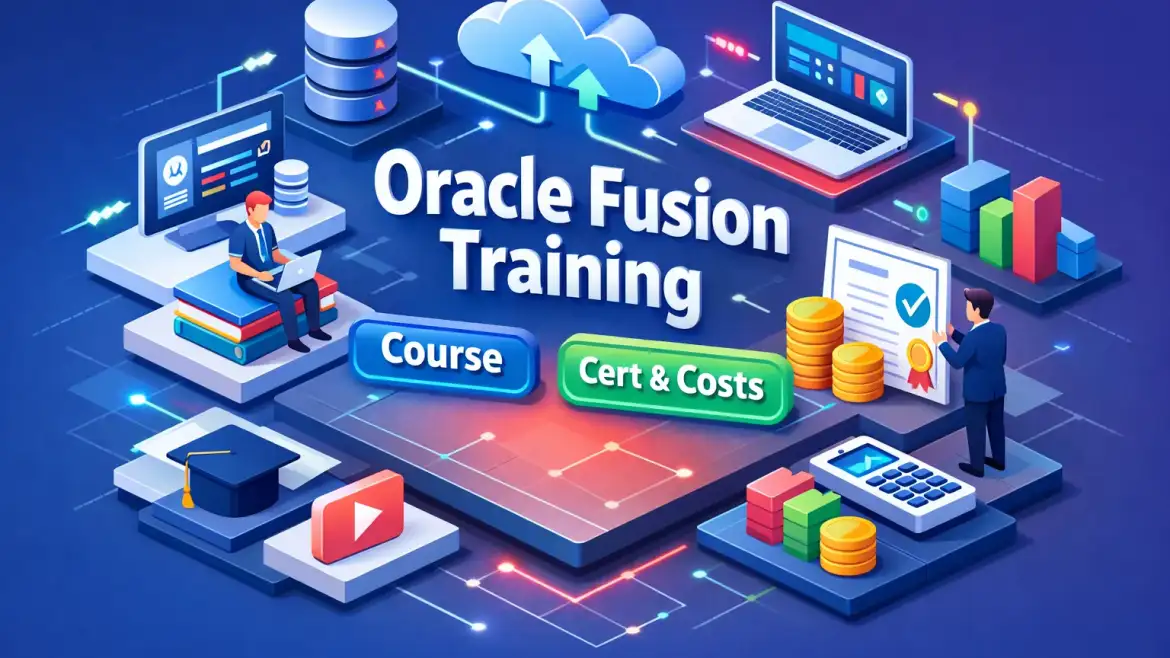
If you need oracle fusion training that lands a job, pick a course with live lab access and a placement track. For consultants, go Implementation Professional; for freshers, start with Foundations + CloudShine’s placement program.
CloudShine is a practical, hands‑on alternative that pairs live Fusion instances with placement support. Below I compare official vs third‑party options (cost, duration, labs, common exam codes) and give a clear 30/60/90 roadmap so you can enroll with confidence.
Quick verdict: which Oracle Fusion training fits your role?
Pivoter (experienced ERP/EBS or finance pros): Target an Implementation Professional track (Financials or HCM). Use Oracle University role paths for official content and add third‑party/live labs as needed — expect a 2–3 month focused program to move into cloud implementations.
Aspirant (recent grads): Start with the Foundations Associate path, complete 60–80 hours of guided hands‑on work (CloudShine’s 60:24 model fits well), and build a placement‑ready project. Target 45–90 days depending on your starting point.
Enterprise buyers: Buy Oracle University subscriptions for standardized learning and pair with a corporate upskill partner (CloudShine) to deliver bespoke labs and a Recruit‑Train‑Deliver model so new hires are billable quickly.
Why this matters: Oracle certs provide recognition, but employers hire people who can configure flows and solve real issues. Official tracks + live instances balance credibility with job readiness.
What Oracle University actually offers (paths, exams, and what’s included)
Oracle uses a role‑based learning model: Foundations → Associate → Implementation Professional, with Implementation Professional often delivered as performance‑based, proctored exams. The learning subscription bundles digital courses, recommended paths and often some lab access.
- Tier structure: Foundations Associate for basics, Associate for functional understanding, Implementation Professional focused on hands‑on scenarios and performance tasks.
- Subscription & labs (approx): Oracle Cloud Learning Subscriptions typically run 12 months and may include three exam attempts. Self‑paced hands‑on labs are commonly listed at about $29/month or $299/year — confirm current pricing with Oracle.
- Exam anchors (verify current codes): General Ledger — 1Z0‑1054‑26; Accounts Payable — 1Z0‑1055‑YY; Accounts Receivable — 1Z0‑1056‑YY. Implementation Professional exams may be performance‑based and proctored.
Practical note: recent updates emphasize modernized processes (Redwood UI, AI‑assisted features). That means exam scenarios and employer expectations favor candidates who know the updated interfaces and end‑to‑end business flows, not just menus.
Pros & cons: Oracle content is authoritative and certs carry weight, but official offerings can be expensive and sometimes sparse on continuous live instance time unless you buy extra lab subscriptions or partner training.
Third‑party courses compared: labs, cost, and CloudShine’s practical edge
Many learners pick third‑party providers to get more hands‑on time, lower cost, and a placement focus. When you evaluate vendors, confirm live instance access, real project labs, trainer industry experience, and placement support.
Typical market offerings vary: providers run 30–80 hour programs; pricing depends on region and whether placement is included. Some vendors focus on conceptual modules, others on full cycle P2P/O2C or Hire‑to‑Retire lab projects.
Provider snapshots (typical promise):
- igmGuru — short to mid‑length ERP courses focused on module fundamentals (typical 30–40 hours).
- OnboardERP — tailored end‑user and project training for corporate rollouts; emphasis on process adoption and documentation.
- CloudShine — a 60:24 practical model (60 hours instructor + 24+ lab hours), live Fusion instances, resume and mock interview support, and a Recruit‑Train‑Deliver corporate option; trainers with 15+ years of experience and a track record training 500+ consultants.
Why CloudShine’s model matters: access to live Fusion instances and scenario‑based labs means students can demonstrate full cycle work (configure a ledger, post journals, run payroll, set approval hierarchies) in interviews rather than reciting slides. The placement cell walks students through project summaries and mock implementations, which is what hiring managers actually ask for.
Quick buyer tips: ask for a sample lab, request at least one mock interview, and confirm exam‑prep coverage (practice tests + performance task walkthroughs).
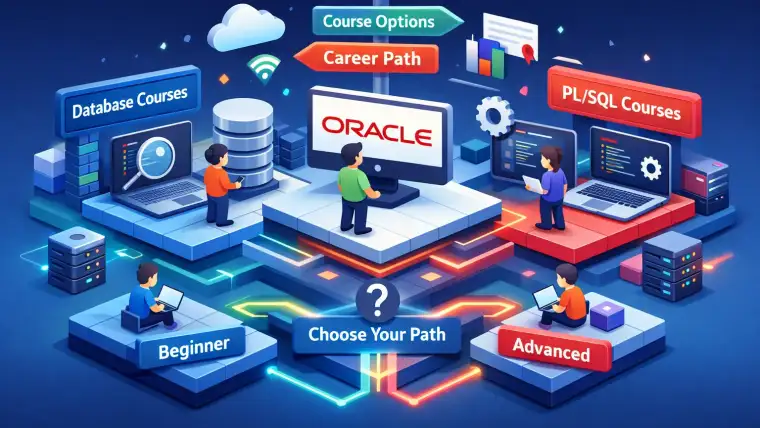
How to choose: a practical checklist and role‑based recommendations
Decision rule: pick the path that gets you to a demonstrable implementation task you can show on day one of an interview.
Checklist (short): target role, time to hire, budget, employer sponsorship, required certification and level of live lab access. If lab time is critical, prioritize vendors that provide continuous instance access rather than occasional demos.
Role recommendations:
Finance/ERP implementer: Foundations → GL or Payables Implementation Professional. Focus on chart of accounts setup, period close and reconciliations (see Common Errors in Oracle Fusion Cost Accounting).
HCM implementer: Foundations → Core HR + Payroll → HCM Implementation Professional. Build end‑to‑end hire‑to‑retire labs and payroll runs.
New grad/aspirant: Foundations Associate + CloudShine placement track to get a CV‑ready project and 2–3 mock interviews.
Corporate upskill: Oracle University subscription for standardized content + CloudShine corporate delivery for bespoke labs and Recruit‑Train‑Deliver execution (match training to specific procurement roles: Oracle Fusion Purchasing important roles).
Example scenario: a payroll analyst moving into HCM — a focused 60‑day plan: Foundations (weeks 1–2), payroll configuration labs + 2 real payroll runs (weeks 3–6), mock implementation review and interview prep (weeks 7–8).
Study plan, labs and exam prep (30/60/90 day roadmap)
Day 0 checklist: pick your track, confirm the current exam code on Oracle’s site, register for Oracle MyLearn free modules, and reserve lab access (Oracle self‑paced labs or vendor instance). For a quick MyLearn guide see Oracle MyLearn: accelerating your path.
30‑day sprint — foundations + core labs: Finish Foundations modules, complete 8–10 core labs (configure COA, create journals, basic OTBI report, run a payroll preview). Take an initial practice test to baseline gaps.
60‑day ramp — configuration + mock projects: Complete full implementation flows (P2P, O2C, Hire‑to‑Retire), finish 2–3 full cycle labs, and present a short implementation playbook to a mentor. CloudShine’s placement track includes a mock implementation review at this stage.
90‑day polish — exam & placement: Retake practice tests, book the certification window, record a one‑page project summary for interviews, and do 2–3 timed mock interviews with hiring‑grade feedback.
Example lab task list to practice: configure a ledger and period close, create and post journals, configure pay elements, run payroll end‑to‑end, build an OTBI report, perform a data load with HCM Data Loader.
Exam‑day tips: review a sample performance task in advance, allocate time to planning vs execution, know how to reference allowed Oracle docs during proctored tasks, and practice under timed conditions.
Pricing snapshot, five next steps and FAQs
Pricing (approximate): Oracle exam attempts — ~$245 per attempt; Oracle self‑paced labs — $29/month or $299/year (approx); Oracle Cloud Learning Subscription — request quote (Oracle lists enterprise subscription pricing); third‑party hands‑on courses — typically $500–$2,500 depending on region and placement services. CloudShine offers tiered, affordable packages with placement options — contact admissions for current rates.
Five immediate next steps
- Pick your track and verify the exact Oracle exam code for the current year on Oracle’s certification site.
- Complete the free Oracle MyLearn Foundations modules to confirm the path.
- Choose lab access: Oracle self‑paced labs or a vendor with live instances (CloudShine recommended if you need placement).
- Build a 60‑day study plan and book a tentative exam window.
- Schedule two mock interviews and a CV review (CloudShine placement cell or trusted peers).
FAQs
Do I need live instance access to pass Oracle Fusion certification? For Implementation Professional performance exams and real job readiness, yes — live labs make the difference between theory and implementation competence.
How much do Oracle Fusion Cloud certification exams cost? Expect roughly $245 per attempt for many core exams; subscriptions may include exam attempts — verify current pricing before you book.
Which certification should I take first as a finance professional? Start with Foundations, then General Ledger or Payables depending on where you want to specialize; move to Implementation Professional once you have hands‑on experience.
Can third‑party courses replace Oracle University? They can for job readiness and labs, but official certs and Oracle’s role‑based paths come from Oracle — the most efficient route is a mix of official content plus vendor labs and placement support.
Where can I find free Oracle Fusion Cloud introductory courses? Oracle MyLearn offers free Foundations and product essentials — use those modules to validate the track before paying for labs or paid courses.
If you want a quick consult to pick the right track, CloudShine’s admissions team can map your profile to a 30/60/90 plan and share current batch pricing.