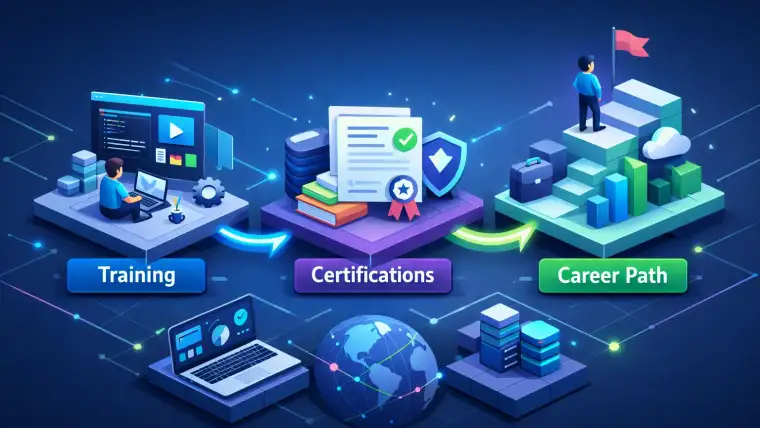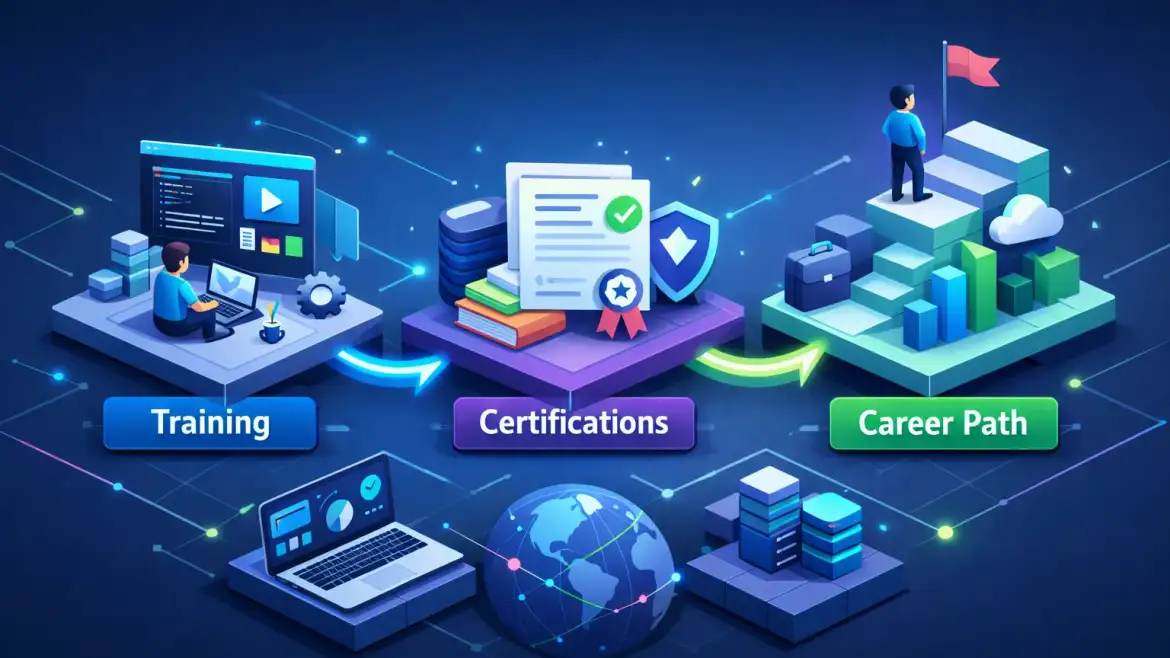
Yes — with focused technical consultant training you can be interview‑ready in 3–12 months depending on background and chosen route. Pick one track (cloud, ERP functional, ServiceNow/CRM, or integrations), earn one vendor certification, and complete two practical projects that you can demo.
This guide gives copyable roadmaps (3/6/12 months), the exact certs and courses that hiring managers respect, project templates you can finish, and an interview checklist. I’ll also show CloudShine’s live‑instance bootcamp approach so you can compare a DIY plan versus guided, hands‑on training.
Choose a path and timeline — pick the 3, 6 or 12‑month template that matches your background
Fast‑track — 3 months (for experienced IT pivoters)
Weekly commitment: 20–30 hours. Focus: one primary certification (cloud or platform fundamentals), one polished project demo, and three interview stories tied to that project. Outcome: a resume and LinkedIn profile tailored for junior consultant roles.
Accelerated — 6 months (for career switchers with domain knowledge)
Weekly commitment: 10–15 hours. Focus: one main cert plus a smaller supporting cert, two end‑to‑end projects, a documented playbook, and a short demo video for each project. Outcome: GitHub repo, portfolio case studies, and consistent interview practice.
Comprehensive — 12 months (for beginners)
Weekly commitment: 6–10 hours. Focus: foundational certs, three small projects, a portfolio site, basic networking and internship/contract outreach. Outcome: broader coverage and time to land an internship or entry role.
How to choose: if you’ve done Dev/Ops or ERP admin work already, choose 3‑month. If you come from a related business function (finance, HR systems), choose 6‑month. If you’re new to IT, choose 12‑month. Block the weekly hours on your calendar for the next 30/60/90 days and treat that as non‑negotiable.
Actionable takeaway: Decide your route today, slot weekly hours for the next month, and commit to one cert + two projects as your minimum viable hiring package.
What hiring managers actually want — a two‑axis skills map
Hiring managers hire for outcomes, not badges. They want two buckets: technical skills that reduce ramp time, and consulting skills that make you useful in client conversations.
Technical skills employers commonly test: cloud fundamentals (AWS/Azure), SQL/data handling, a scripting language (Python/JavaScript) for integrations, API/REST knowledge, Infrastructure as Code basics (Terraform), and platform configuration (Oracle Fusion module flows).
Consulting skills employers test: process mapping (Procure‑to‑Pay, Hire‑to‑Retire), requirement gathering, clear runbooks and test cases, stakeholder communication, and handover documentation.
Role mapping (non‑negotiables):
- Cloud/Infra Consultant — AWS/Azure basics, Terraform, CI/CD familiarity, monitoring basics.
- ERP Functional Consultant — domain process knowledge (HCM/Finance/SCM), config screenshots, test scripts.
- ServiceNow/ITSM Consultant — CSA knowledge, incident/CMDB design, integration basics.
- Integration/Technical Consultant — APIs, middleware basics, ETL or scripting, data validation plans.
For a focused integration certification path, see Oracle Integration Cloud Service Certification: Your Ultimate Guide.
Example from practice: CloudShine’s 60:24 model pairs 60 hours of instructor‑led scenarios with 24+ hours of dedicated live‑instance labs. Students learn a process in class, then immediately perform the configuration in a live Oracle/Cloud instance — that mapping is what turns knowledge into interview anecdotes.
Actionable takeaway: Build a one‑page skills map listing six technical must‑haves and four consulting must‑haves; prepare one interview example for each consulting skill.
Certs and courses that actually move the needle — what to take and when
Choose one primary certification aligned to the job you want; supplemental certs fill obvious gaps (for example, ITIL for process roles).
High‑impact certs by track:
Cloud: start with AWS Certified Cloud Practitioner ($100 exam) then move to Solutions Architect Associate ($150). For Azure, AZ‑900 then AZ‑104. These prove cloud literacy and basic design skills.
ERP/Enterprise apps: Oracle Cloud Foundations or specific Oracle Fusion module tracks for functional roles. Oracle Cloud Foundations can be free at times; application exams typically range $95–$245. Learn more about the career progression in The Path to Becoming an Oracle Fusion Consultant: Skills and Challenges.
ServiceNow: Certified System Administrator (CSA) is the gateway (exam ~$300 plus mandatory admin training). CAD/CIS tracks follow for dev/implementation specialties. For more context on the ServiceNow role and expected skills, see this ServiceNow technical consultant career guide.
Salesforce: Salesforce Administrator (ADM‑201) for CRM roles; widely recognized by employers.
Process/Delivery: ITIL Foundation helps consultants speak the same language as delivery managers and clients.
How to use course providers: combine vendor docs and free vendor learning (AWS Skill Builder, Microsoft Learn) for fundamentals, use Pluralsight/Coursera or Udemy for guided paths, and use a live lab or bootcamp when you need instance access. Always verify current exam fees and schedule early so your study has a hard deadline. For implementation and migration checklists and tips, see Oracle Cloud Implementation Best Practices: Tips for A Successful Migration, CloudShine.
Actionable takeaway: Pick a primary cert aligned to your target job and schedule the exam within the first 6–8 weeks; back that up with weekly lab time.
Hands‑on projects and portfolio deliverables you can finish and show
Certificates are currency; projects are proof. Recruiters want to see you actually delivered a configuration, migration, or integration.
- ERP Functional (3–6 weeks): Build a Hire‑to‑Retire flow in a sandbox — deliver: process map, configuration screenshots, test scripts, and a 7‑minute recorded demo.
- ServiceNow Implementation (2–4 weeks): Implement Incident + CMDB + simple email webhook — deliver: flow diagram, exportable XML, configuration notes, demo video.
- Cloud + Integration (2–4 weeks): Deploy a sample web app to AWS with Terraform, attach RDS, add a basic CI/CD pipeline — deliver: repo, Terraform files, architecture diagram, cost runbook.
- Data Migration Playbook (1–3 weeks): ETL from CSV to Oracle/Salesforce with validation and rollback — deliver: migration plan, scripts, validation logs.
Present each project as a one‑page case study, a sanitized GitHub repo or private repo with screenshots, and a 3–7 minute demo video that ties the technical work to a business outcome.
Actionable takeaway: Choose two project templates that match your target role and schedule them as milestones in your roadmap.
How to apply and interview as a junior technical consultant
Your resume must read like a consulting brief: role title, two‑three project bullets with outcomes, technologies used, and your specific contribution. Example bullets you can copy:
- ERP: “Configured Oracle Fusion HCM Hire‑to‑Retire flow (security, workflows, business rules); reduced manual onboarding steps in test scenario; produced test scripts and 7‑minute demo.”
- Cloud: “Deployed sample Node web app to AWS using Terraform; automated CI/CD pipeline with CodePipeline; documented cost runbook and rollback steps.”
LinkedIn: make your headline target‑role specific (e.g., “Aspiring Oracle Fusion Functional Consultant | HCM / Payroll Configuration”). In outreach, lead with a one‑line value pitch and link to a one‑page case study.
Interview prep: be ready to walk through a configuration, whiteboard an integration, or debug a failed deployment. Prepare STAR stories for consulting skills (requirement gathering, stakeholder handovers). Have a 30/60/90 plan you can present on request. For a practical primer on how to enter the field, see how to become a technical consultant (practical steps and hiring expectations).
Placement support: structured programs that include mock interviews, resume reviews and placement cells shorten the path. CloudShine provides live instance labs, mentor review sessions and a placement cell focused on resume polishing and mock interviews — those are the features that typically shave weeks off your job search.
Actionable takeaway: Have one 30/60/90 plan, a one‑page case study, and a 60‑second pitch linking your project to business impact ready before each interview.
Budget, copy‑and‑paste 3/6/12‑month plans, and next steps
| Route | Weekly Hours | Key Milestones | Certs & Projects | Estimated Spend (ballpark) |
|---|---|---|---|---|
| 3‑month Fast‑track | 20–30 hrs | Week 1: cert study; Week 4: exam; Weeks 5–12: project + demos | AWS Cloud Practitioner → Project: Cloud + Integration | $400–$1,500 (exam, labs, course) |
| 6‑month Accelerated | 10–15 hrs | Months 1–2: certs; Months 3–5: two projects; Month 6: interviews | Primary cert (Oracle/ServiceNow) + supporting cert; two end‑to‑end projects | $800–$3,000 |
| 12‑month Comprehensive | 6–10 hrs | Quarter 1: fundamentals; Q2–Q3: projects & portfolio; Q4: internships/apply | Foundational certs, 3 small projects, portfolio site | $500–$2,500 |
Quick ROI note: focused projects + one meaningful cert + a polished resume typically unlock interviews faster than collecting multiple certificates without demonstrable delivery.
Final checklist:
- Pick a track (cloud, ERP, ServiceNow, or integration).
- Schedule your primary certification and a lab session within 72 hours.
- Choose two projects and add them to your calendar as milestones.
- Prepare one 30/60/90 plan and a one‑page case study for each project.
- Book at least five mock interviews (peers/mentors/recruiters).
If you prefer a guided path with live instances and placement support, CloudShine’s practical bootcamp model (the 60:24 rule, trainer mentors, and a placement cell) is an example of how the process can be compressed and de‑risked. If you are deciding whether to modernize existing systems, read Top 10 signs that it’s time for modern cloud applications.
FAQs
How long until I can get a junior technical consultant job?
With prior IT experience: 3–6 months. From non‑IT backgrounds: 6–12 months with disciplined study and two demonstrable projects.
Which certification should I start with?
Align cert to your target role: AWS Cloud Practitioner for cloud roles, ServiceNow CSA for ITSM work, Oracle foundations or a module cert for Oracle Fusion functional roles.
Do I need to code?
Basic scripting (Python/JavaScript) and SQL are highly useful, especially for integration and automation tasks. You don’t need to be a full‑stack developer for most junior consultant roles.
How much will training cost?
Expect $400–$3,000 depending on route: exam fees, lab subscriptions, and a quality bootcamp if you choose one. Verify current exam prices before you budget. For market compensation context, see Technical Consultant salary data.
What’s the single most important thing to get hired?
A short portfolio: one cert + two practical projects with a 3–7 minute demo that ties work to a business outcome.
Final word: pick a route, block the hours, and start your first lab within 72 hours. One certification plus two finished projects will change how recruiters evaluate you. If you’d like a live‑instance path with mentor support and placement assistance, CloudShine offers hands‑on bootcamps built around those exact milestones.